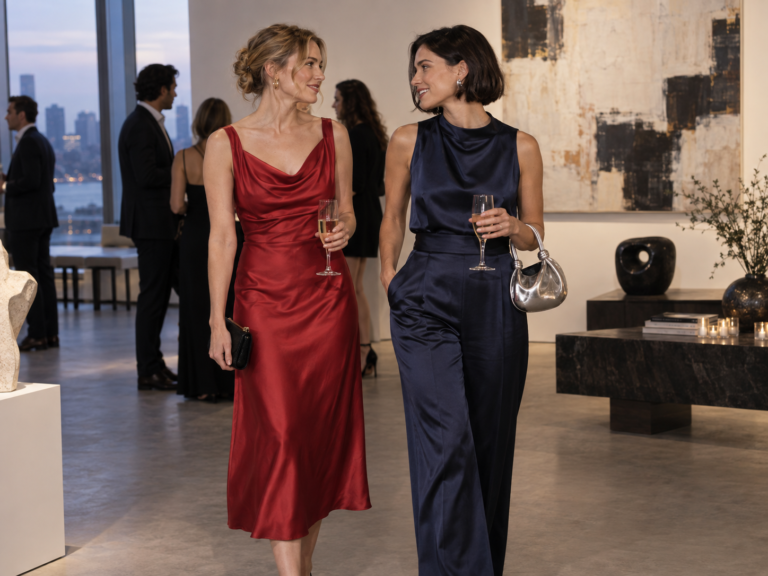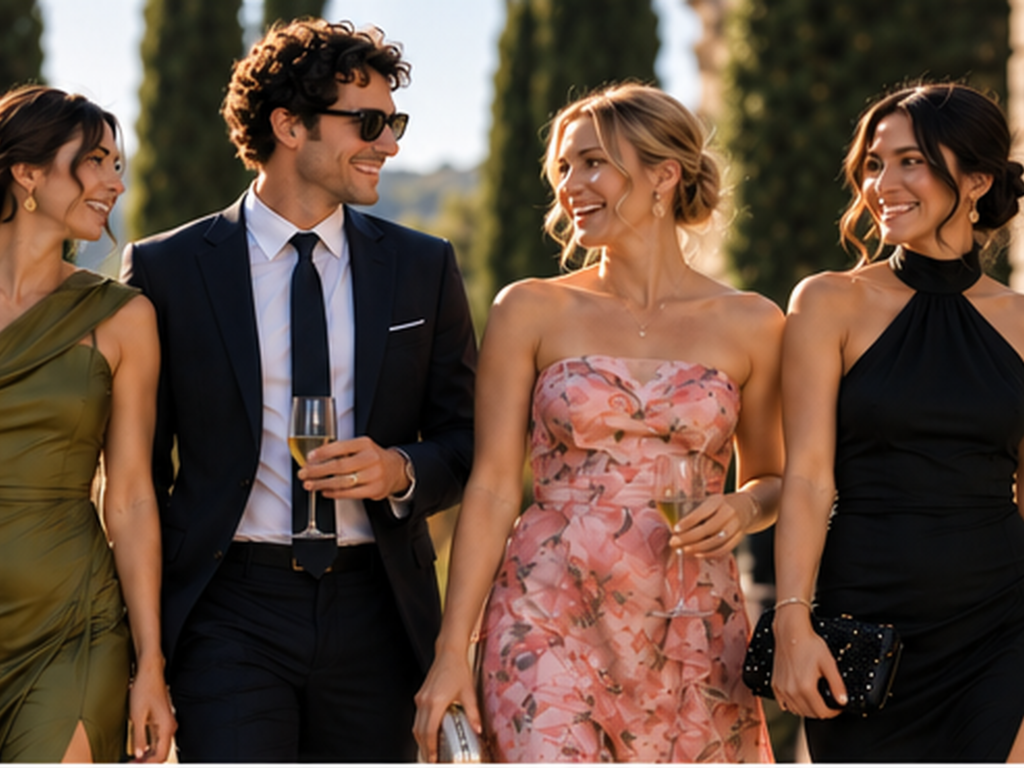
Cocktail sounds straightforward until you actually have to get dressed. A cocktail wedding calls for something polished and celebratory, generally sitting between semi-formal and formal. A midi dress is the easiest route, but an elevated shorter dress, a sophisticated jumpsuit or dressy separates can work just as well.
The dress code on the invitation is only the starting point. A cocktail wedding at noon in a garden and one at 8 PM in a downtown hotel both say “cocktail,” but they ask for two different outfits. This guide walks through how to read those signals—venue, time of day, ready-to-wear outfit formulas—so you show up dressed for the actual event, not just the word on the card.
Cocktail Wedding Attire in 30 Seconds
Formality
Polished and celebratory, below black tie.
Safest option
An elevated midi with dressy shoes and intentional accessories.
Also works
A sophisticated jumpsuit, shorter dress or dressy separates.
Remember
Venue, time, weather and activity determine how you interpret the dress code.
What Cocktail Attire Means at a Wedding
Cocktail is dressed-up event wear without the ceremony of black tie. You want the outfit to look intentional and occasion-ready, but you do not need a gown. The separate Cocktail Attire guide owns the full dress-code definition; here, the useful question is how the wedding changes your interpretation.
In practice, that means avoiding both ends of the spectrum. Jeans, sneakers, sundresses and anything beach-casual read as underdressed no matter how put-together they are. A full-length gown, head-to-toe sequins or anything you would wear to a black-tie gala reads as overdressed and can pull focus from the couple. The middle ground—a considered silhouette, a fabric with some weight or shine, shoes and accessories that look chosen rather than grabbed—is what cocktail is actually asking for.
The Cocktail Wedding Equation
Cocktail establishes the boundaries. The other four tell you where within those boundaries your outfit should land.
What to Wear Based on Venue
Cocktail sets the floor; the venue tells you how to build on top of it. The same silhouette can read completely differently on grass, in a ballroom, at a restaurant table or on sand—mostly because of what the ground, the lighting and the temperature do to your choices. Here is how to adjust for each.
Garden
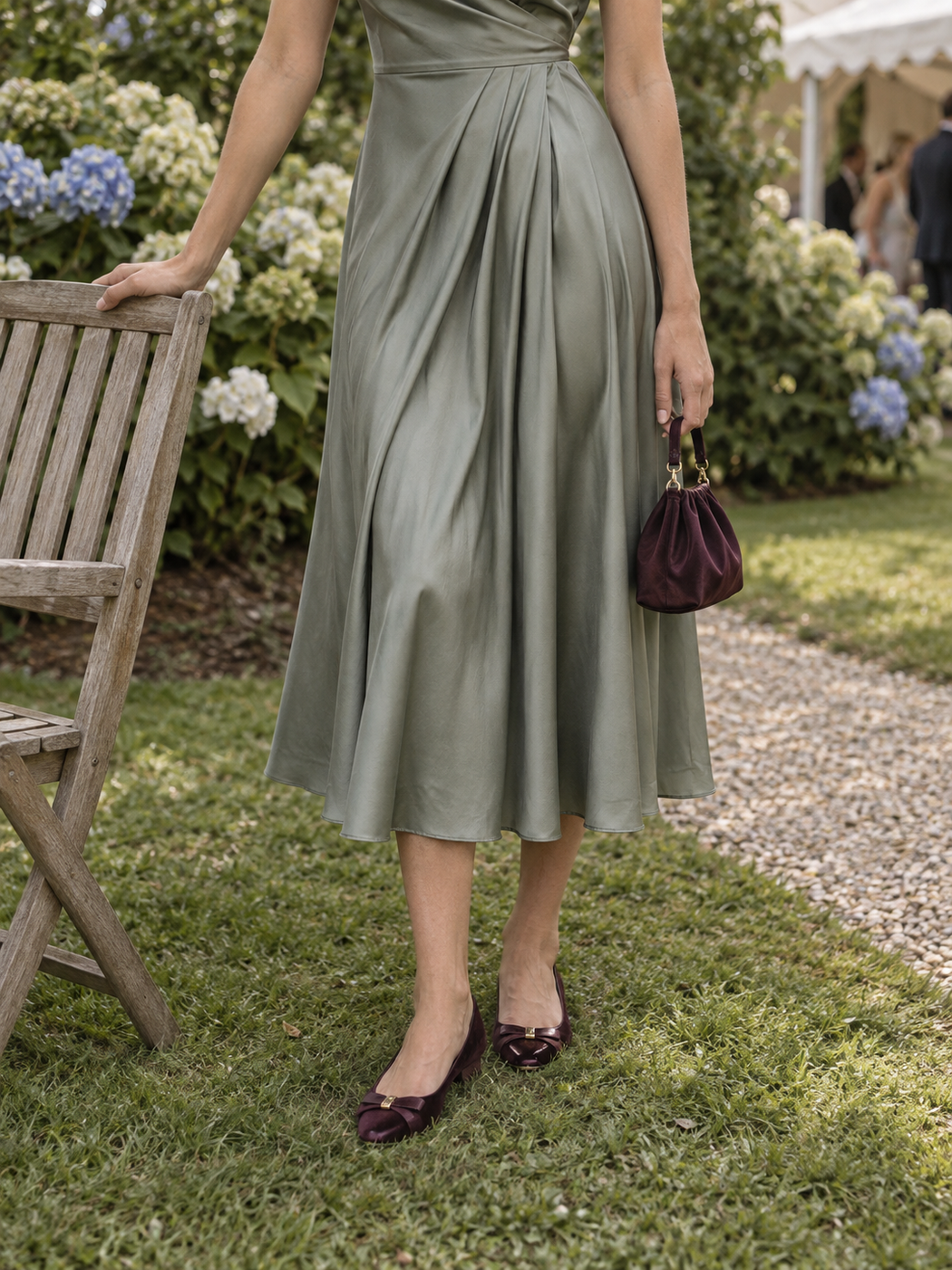
Let terrain influence the shoe. A block heel, flat or stable sandal is usually more useful than a delicate stiletto on grass. Fabrics and prints can feel lighter, but the overall finish should still read as event dressing.
A thin heel will sink after the first hour, so build the outfit around a shoe that can actually survive the lawn. Floral or botanical prints feel obviously at home here, but keep at least one element—a structured bag, a polished shoe, real jewelry—doing the work of signaling “event” rather than “garden party.”
Hotel or Ballroom
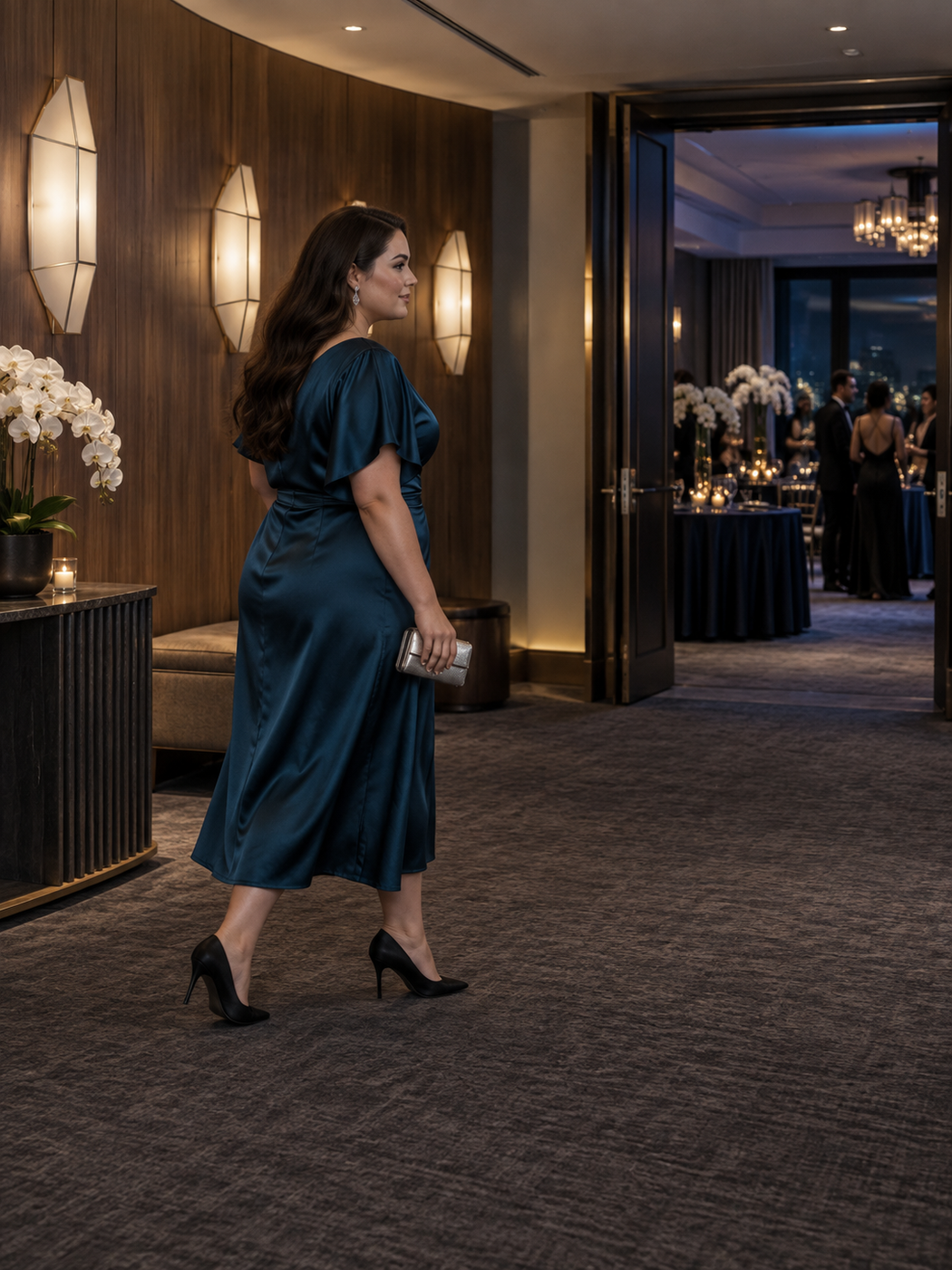
This is the easiest place to lean slightly dressier: richer fabric, a stronger evening bag, more polished jewelry or a sleeker shoe.
Carpet and controlled lighting are forgiving, so this is where a fabric with real drape or shine—satin, a good crepe, a subtle metallic—earns its keep instead of looking like overkill. If you only own one “goes with everything” evening bag, this is the venue to bring it out.
Restaurant or City Venue
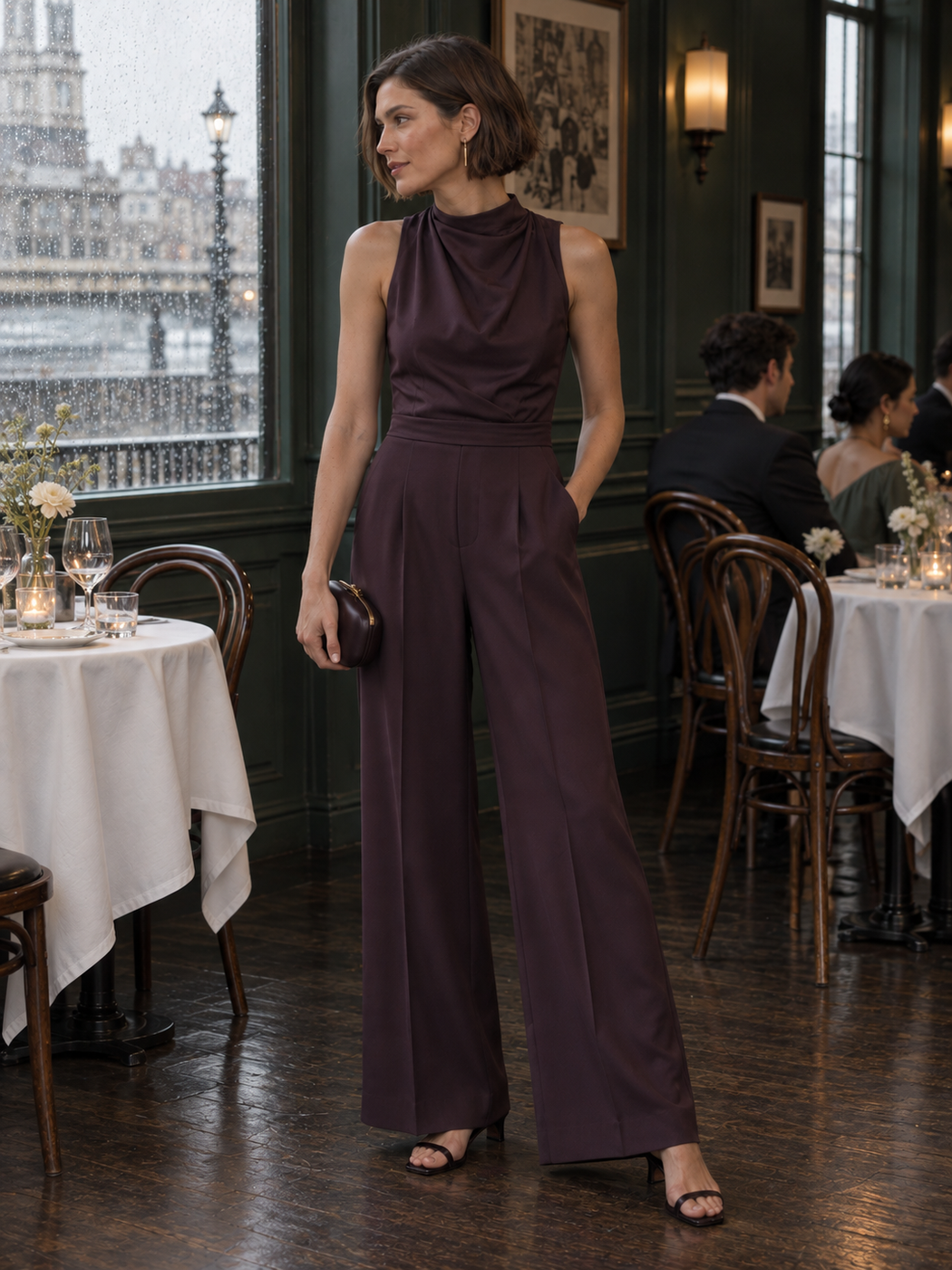
Cleaner lines and sharper styling work naturally. A jumpsuit, tailored separates or a sleek midi can feel more at home than overtly romantic wedding-guest dressing.
Skip anything with a full skirt or heavy embellishment—it reads more bridal-adjacent than the setting calls for. A monochrome look, a sharp trouser silhouette or a slip dress with tailored outerwear tends to fit the room better than classic florals.
Beach or Destination
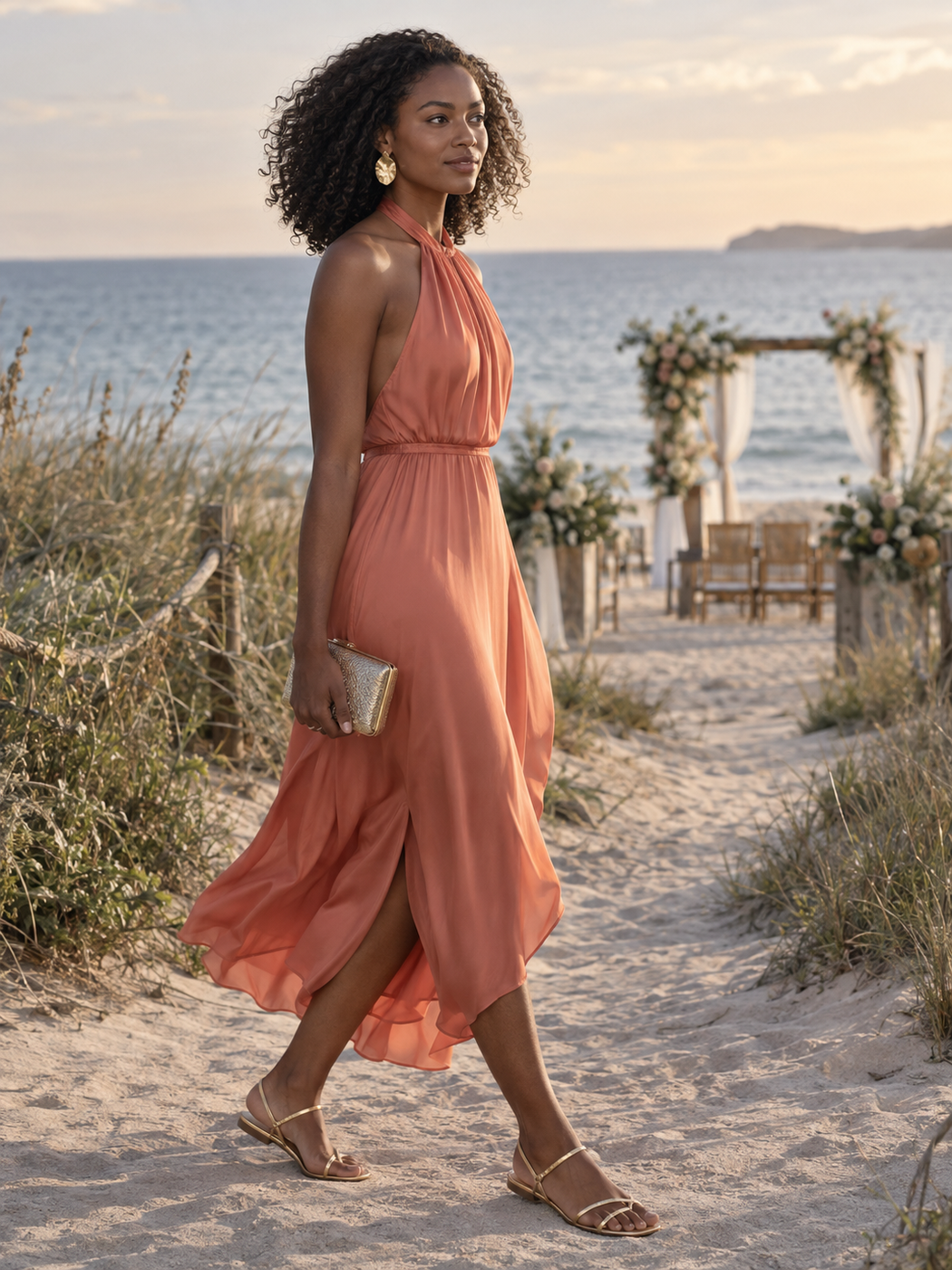
Beach does not automatically mean casual. Keep the dress code, then adapt the fabric, shoe and silhouette for heat, sand and movement.
Linen, crepe and lightweight knits hold up better than stiff fabric in heat and humidity. Skip stilettos entirely—sand swallows them—and look for a wedge, block heel or dressy flat instead. Pack a light layer for after sunset; destination weddings cool down faster than the day suggests.
Daytime vs. Evening
Daytime cocktail can usually take lighter color, softer fabrication and less overtly evening styling. At night, deeper color, satin, velvet, stronger jewelry and a more refined bag can raise the formality without pushing the outfit into black tie.
Time of day is doing more work than most people give it credit for. A pastel midi that looks perfectly pitched at a 1 PM ceremony can look underdressed at an 8 PM reception, and the reverse is true too—a deep jewel-tone or sequined dress can feel like too much at brunch. If your invitation lists a start time, let it inform your color and fabric choices before you settle on a silhouette.
Five Cocktail Wedding Outfit Formulas
The five formulas below are built from the variables above—different venues, different times of day—turned into complete, ready-to-wear outfits. Start with whichever one matches your invitation, then adjust from there.
These are starting points, not uniforms. Tap or click one to see the formula. Each can move slightly up or down depending on the wedding.
What Shoes Work?
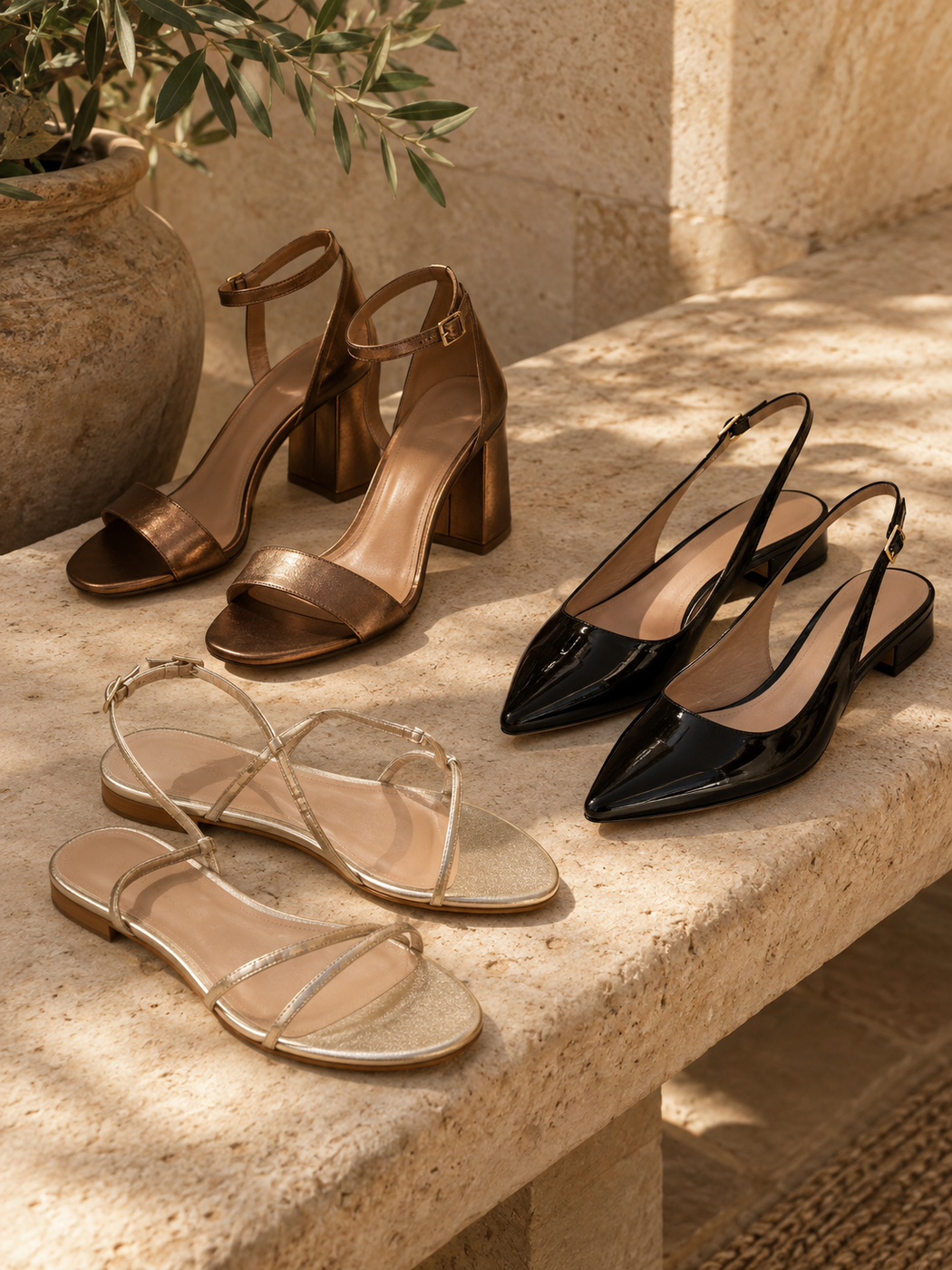
Heels are not a requirement. Pumps, slingbacks, block heels, dressy flats and refined sandals can all work. Choose for the outfit and the environment; practicality is part of good styling, especially when the wedding involves grass, gravel, sand or a long day on your feet.
The biggest mistake is choosing the shoe last, after the outfit is already decided. If you know the venue involves grass, cobblestone or a long walk between ceremony and reception, let that decide the heel height and shape before anything else—a great outfit undone by shoes you cannot actually stand in for six hours is still a bad outfit.
Can You Wear a Long Dress?
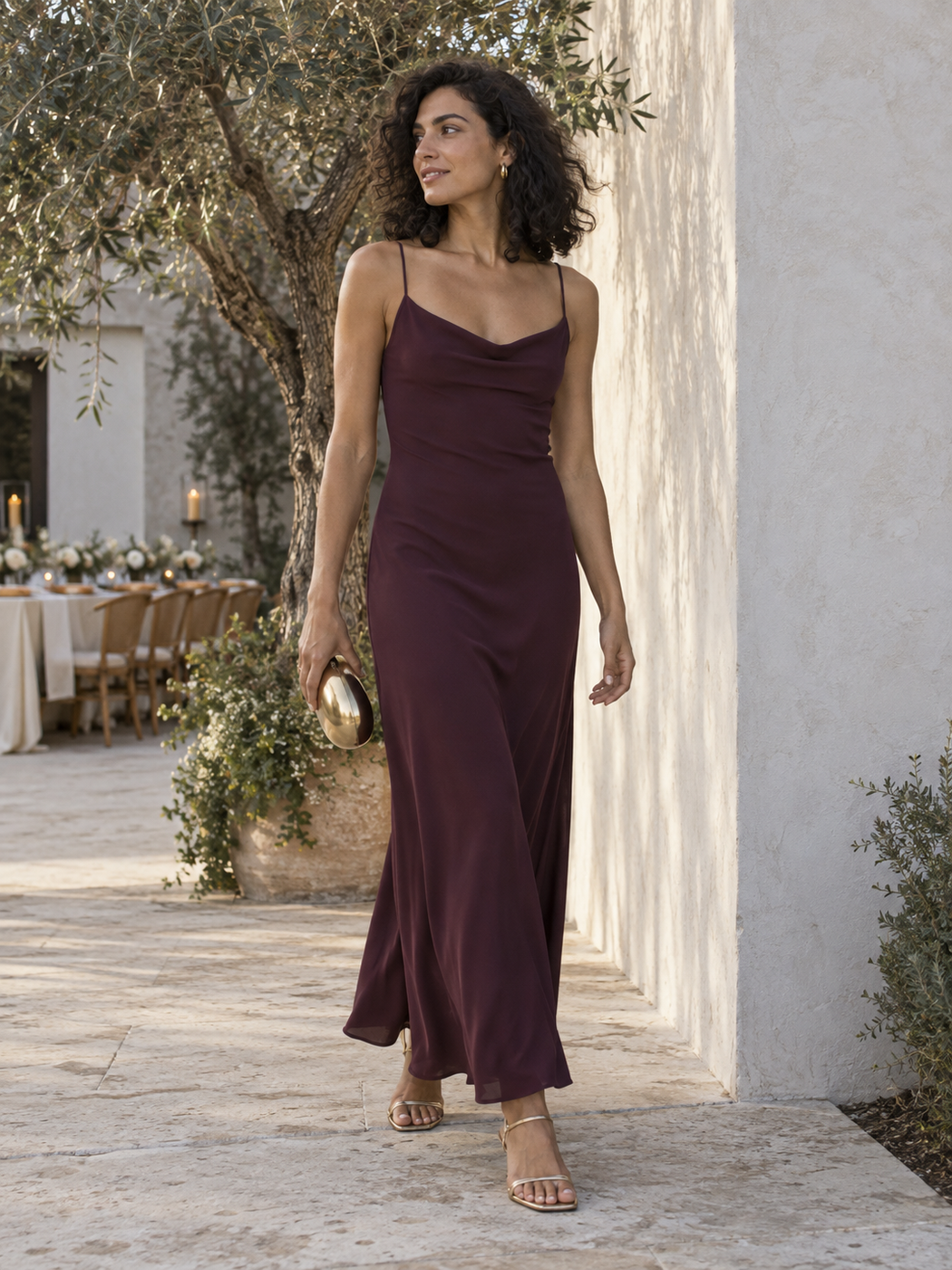
Yes, if it does not read like a formal gown. Length alone does not determine formality; volume, fabrication, embellishment and styling matter just as much. When the invitation is ambiguous, a midi remains the easiest choice.
A slim column silhouette in a lightweight fabric, worn with more casual jewelry and an unfussy hairstyle, can sit comfortably at cocktail. The same length in duchess satin with a train or head-to-toe embellishment crosses into black-tie territory. If you are unsure which side of that line your dress falls on, ask someone else—length is the easiest detail to overthink and the hardest to judge on yourself.
Can You Wear Black?
Yes. Black can be completely appropriate for a cocktail wedding. Let the styling keep it celebratory rather than severe, and follow any specific instructions from the couple.
The old rule against wearing black to a wedding has mostly faded, but the styling still matters. Pair a black dress with color or metallic in the shoe, bag or jewelry, and skip anything that reads more funeral than festive—head-to-toe matte black with no texture or shine is the version worth avoiding. A handful of couples still ask guests to skip black outright; when that instruction exists, follow it over anything written here.
Cocktail vs. Nearby Dress Codes
| Dress code | General level | Easy starting point |
|---|---|---|
| Semi-formal | Polished, relatively relaxed | Elevated dress, jumpsuit or separates |
| Cocktail | Dressed-up and celebratory | Midi, elevated mini, jumpsuit or dressy separates |
| Formal | Noticeably more elevated | Sophisticated midi or longer dress |
| Black tie optional | Very elevated | Gown or particularly formal cocktail option |
The Dressing Standard Checklist
Start with cocktail, then dress for the wedding you are actually attending.
- Does the outfit clearly look event-ready?
- Does it make sense for the venue and time?
- Will the shoe work for the terrain?
- Have you accounted for weather and movement?
- Are you inside cocktail territory rather than casual or black tie?