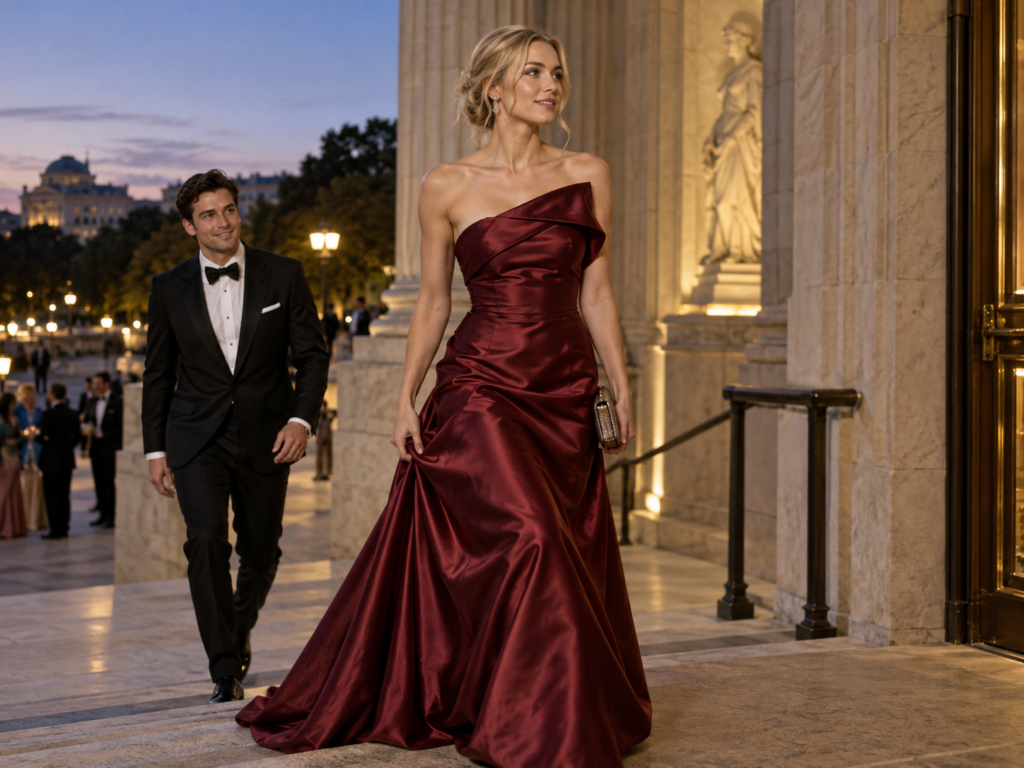
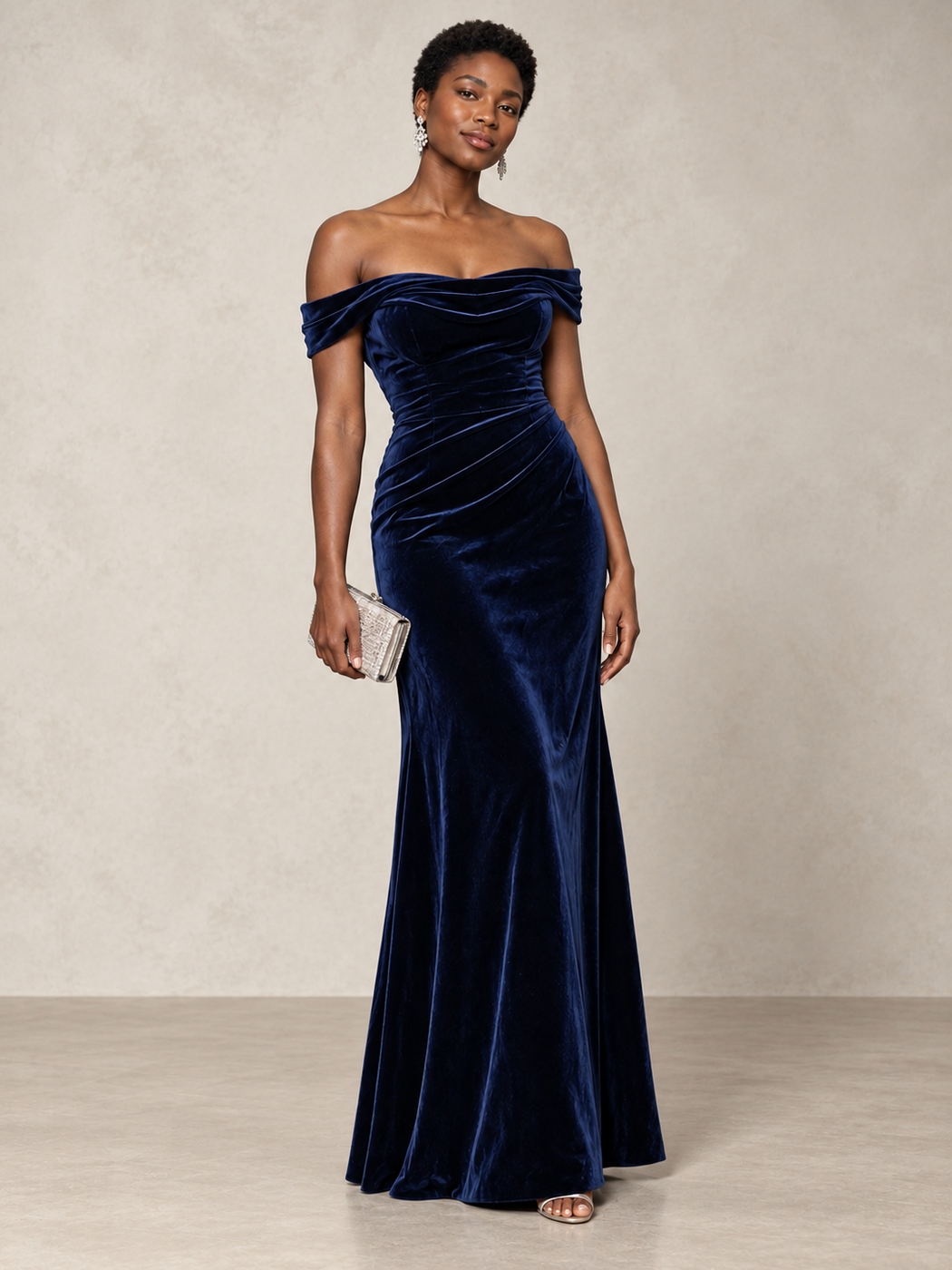
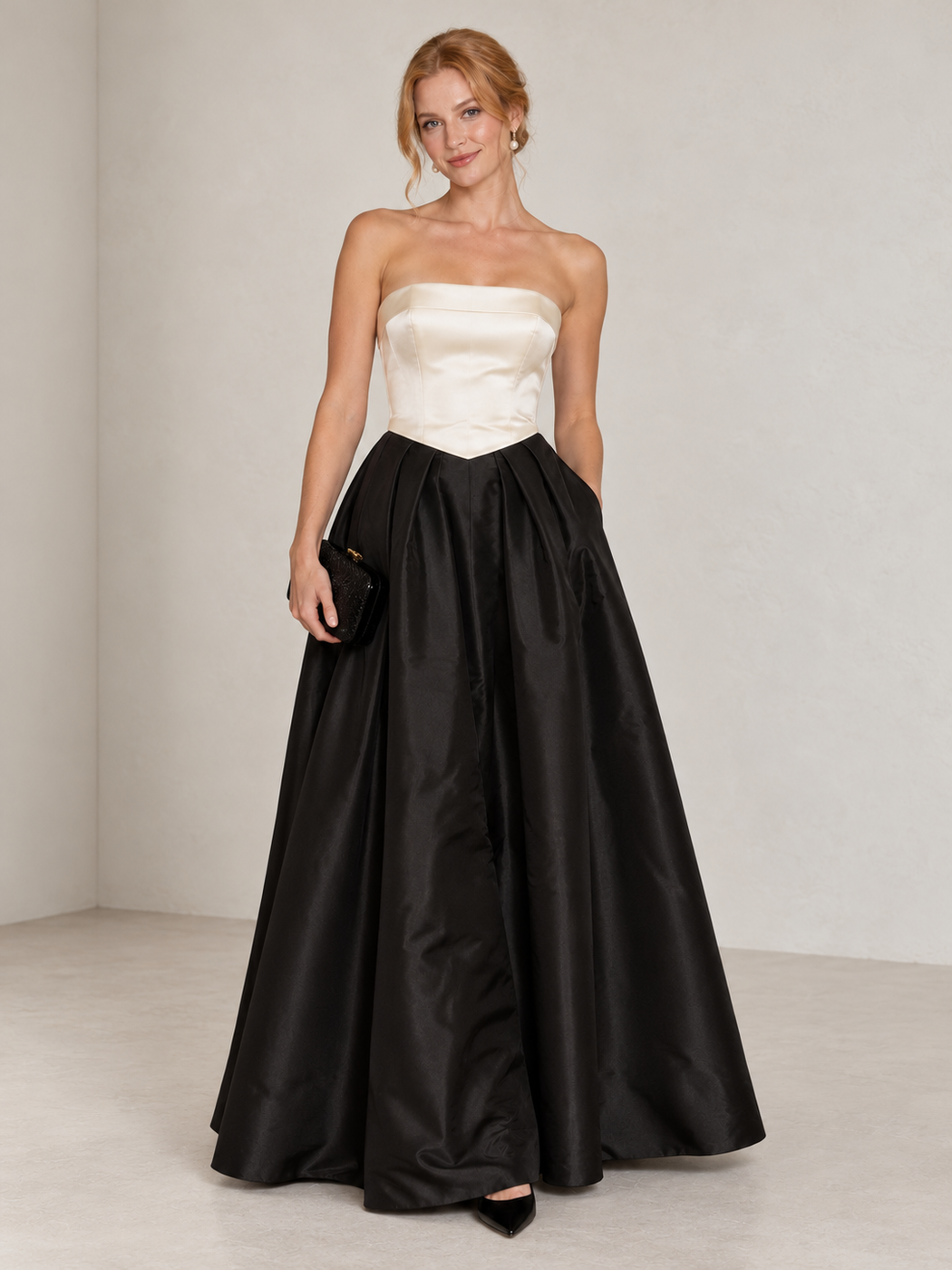
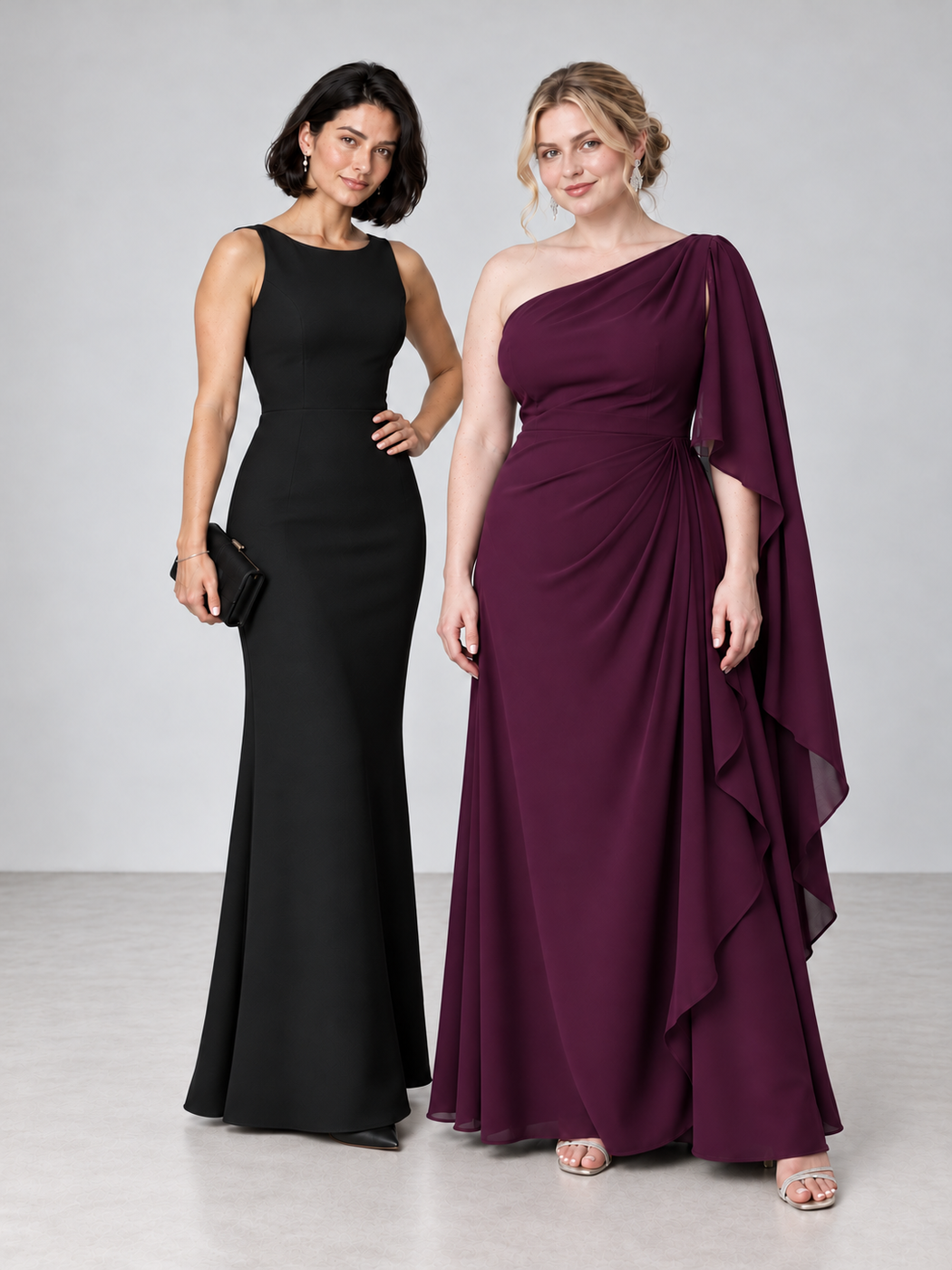
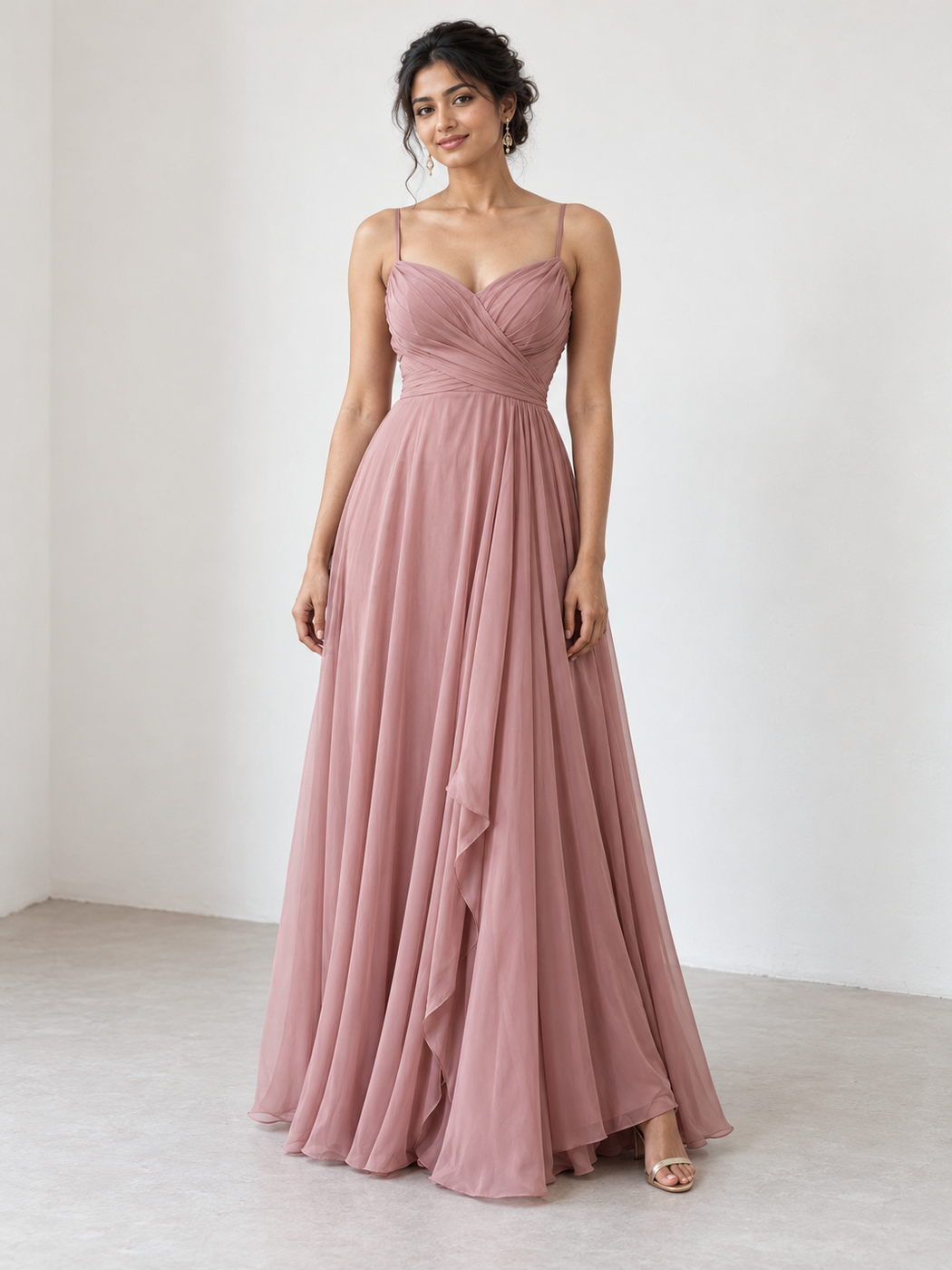
Black tie for women means a formal, floor-length or tea-length gown, or a dressy formal separate like a full-skirted midi with a structured top, in elevated fabrics like silk, satin, or velvet. It calls for polished hair, refined makeup, and dressy heels or formal flats. Black tie sits one level below white tie and one level above cocktail attire — it’s the standard for evening weddings, galas, and formal award ceremonies after 6pm.
What to wear
- A floor-length or tea-length gown in a formal fabric (silk, satin, chiffon, velvet, crepe)
- A dressy jumpsuit in a formal fabric, if it reads as elevated rather than casual
- A full-length or midi skirt paired with a structured, dressy top
- Metallic, jewel-tone, or classic black/neutral color palettes
- Refined accessories: a clutch, fine or fine-look jewelry, dressy heels or embellished flats
What not to wear
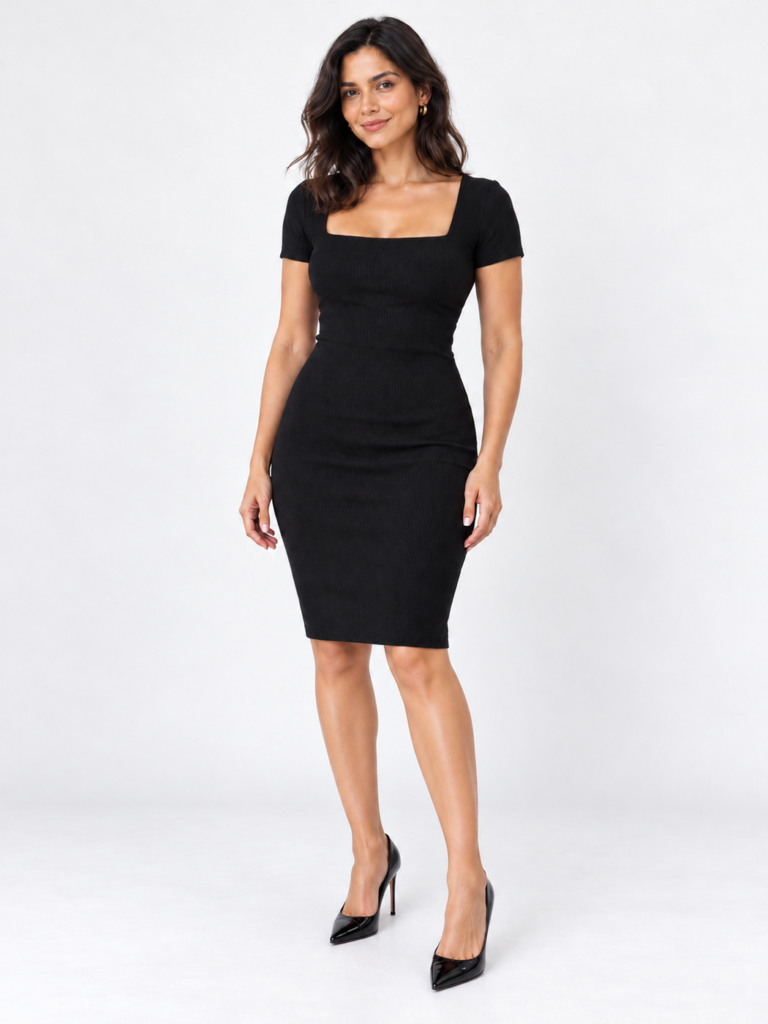
- Cocktail-length dresses above the knee (that's a formality level down)
- Casual fabrics: cotton, denim, jersey knits
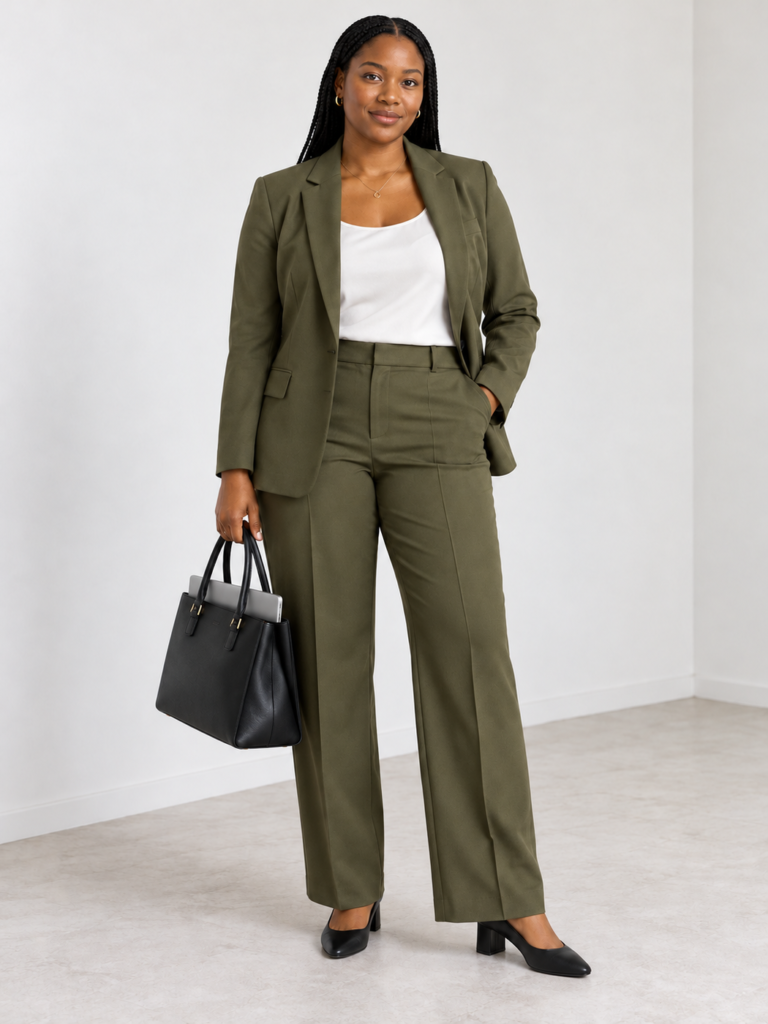
- Daytime accessories: a tote bag, sandals, sneakers
- Anything overly sheer, distressed, or beach-formal (resort maxi dresses read as vacation wear, not black tie)
Do / Don't at a glance
| Do | Don't |
|---|---|
| Choose floor-length or tea-length silhouettes | Wear knee-length or shorter cocktail dresses |
| Pick elevated fabrics — silk, satin, velvet, crepe | Reach for cotton, denim, or casual knits |
| Carry a clutch or small formal bag | Bring a daytime tote or crossbody |
| Wear dressy heels or embellished flats | Wear sandals, sneakers, or daytime flats |
| Keep hair and makeup polished and intentional | Treat it like an everyday going-out look |
The formality scale
- White tie — the most formal; full-length gowns, gloves optional, reserved for state dinners and the most formal galas
- Black tie — floor-length or tea-length gowns, elevated fabrics; the standard for evening weddings and formal galas
- Black tie optional — gowns are still welcome, but a dressy midi or elevated separates are acceptable
- Cocktail — knee-length dresses, dressy separates; more room for shorter hemlines and bolder color
- Semi-formal — a step down from cocktail; dressy but with more flexibility on length and fabric
Venue and season variants
- Summer black-tie wedding: lighter fabrics (silk chiffon, crepe) in the same formal silhouettes — formality doesn't loosen just because it's warm
- Winter gala: velvet, satin, or deeper jewel tones read as seasonally appropriate while staying within the same silhouette rules
- Outdoor black tie (garden or tented event): the dress code doesn't change, but consider a hem that clears grass or gravel, and choose heels with practicality in mind
You asked, we answered
Can I wear black to a black-tie event, or is that too plain?
Black is one of the most classic choices for black tie — the name itself points to it. Elevate it with fabric (satin, velvet), a statement accessory, or an interesting neckline or back detail rather than avoiding the color.
Is a jumpsuit ever appropriate for black tie?
Yes, if it's made from a formal fabric and has a tailored, elevated silhouette. A casual or flowy jumpsuit in cotton or linen reads as too relaxed for the dress code.
What's the difference between black tie and black tie optional?
Black tie optional gives you more flexibility — a dressy midi-length dress or elevated separates are acceptable alongside a full gown. Black tie itself expects floor-length or tea-length formality.